

Chevin Fleet Solutions / Enterprise fleet management
A mature platform made fit for motion.
A six-week redesign of a complex fleet-management product, followed by progressive front-end modernisation across its large legacy codebase.
Inspect the redesign- Client
- Chevin Fleet Solutions
- Launch window
- 6 weeks
- Role
- Senior Product Designer, UX/UI Designer & Front-end Developer
- Delivery
- Product redesign, interaction design and front-end modernisation
Product constraint
The product worked. Its interface no longer did.
FleetWave was a capable enterprise platform, but its desktop-era interface, inconsistent markup and limited reusable styling hooks made the product harder to navigate and slower to improve.
The business also needed a visible redesign for FleetWave 2.0. The work had to create immediate change without pretending a mature operational product could be safely rewritten in one release.
Inherited interface evidence
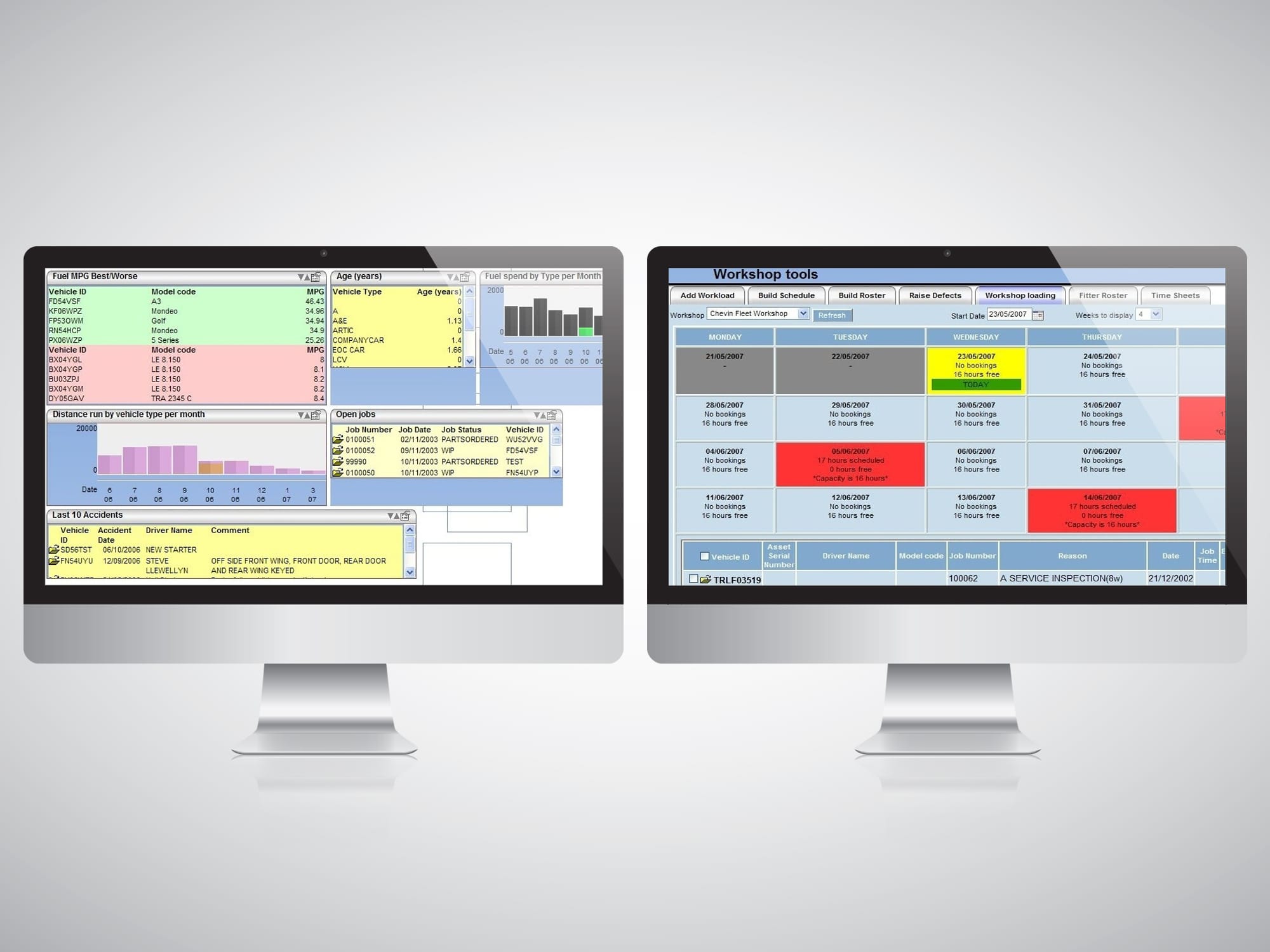
The interface FleetWave 2.0 inherited.
The existing product combined dense dashboards, workshop planning and operational tools in a desktop-era interface with limited reusable structure.
Delivered interface evidence
The operational picture, reorganised.
Fleet teams needed dense operational information to remain visible without the interface feeling fragmented. The redesign created a consistent structure for dashboards, reports and live status.

Interface architecture
One overview. Several operational decisions.
The interface language created repeatable relationships between navigation, summaries, trends, status and exception handling.
Launch window
Immediate change, without an unrealistic rewrite.
- 01 Inspect
Audit the application, interface patterns and front-end constraints.
- 02 Establish
Create a coherent visual and interaction language that can fit the existing product.
- 03 Apply
Deliver the FleetWave 2.0 redesign while protecting working functionality.
Design decisions
What made the change deliverable.
- 01 Separate launch from modernisation
Deliver the visible transformation first, then continue the deeper codebase work as a controlled programme.
- 02 Design within real constraints
Work with the existing application instead of proposing a rewrite that would place functionality and delivery at risk.
- 03 Make every screen reusable
Create repeatable patterns so each improved area strengthens the wider product rather than becoming another isolated treatment.
After the launch
The visual redesign became a front-end foundation.
Navigation, dashboard structures, data presentation and interaction patterns were brought into one recognisable system.
Deprecated markup was replaced with standards-led HTML and the CSS architecture gained maintainable, reusable styling hooks.
- Product redesign and UX/UI improvements
- Reusable visual and interaction language
- Responsive interface styling
- HTML modernisation and CSS architecture
Evidence boundary
Delivered in six weeks. Improvement reported without invented precision.
The redesigned interface launched within six weeks. Positive customer feedback and improved survey scores were reported internally, but the available source does not provide percentages or independently verified metrics.
Programme perspective
The redesign had to improve the product without disrupting the operation.
A programme-side account of the work reinforces the central constraint visible throughout the case: make the interface materially clearer while preserving the workflows people already depended on.
“The dashboards our fleet teams live in went from dense-and-disconnected to dense-and-legible. That distinction matters a lot more at 7am when someone's reading vehicle alerts than it does in a proposal deck.”
Read full testimonial
When we brought Michael onto the FleetWave 2.0 programme, the brief was blunt: make it visibly better within six weeks, without touching anything our operations teams relied on that day. That's a hard line to hold, and he held it. Rather than pitching the rewrite everyone quietly wants and no delivery date can survive, he audited what we already had, worked out which patterns were worth keeping, and built a visual language the product could actually grow into.
The dashboards our fleet teams live in went from dense-and-disconnected to dense-and-legible. That distinction matters a lot more at 7am when someone's reading vehicle alerts than it does in a proposal deck. What I valued most, as the PM holding the timeline, was the discipline to separate the visible launch from the deeper HTML and CSS modernisation underneath it. We shipped the redesign on schedule, and the codebase kept improving afterwards without a second fire drill. Structured, pragmatic, and honest about what six weeks can and can't fix. Exactly what you want from someone touching a system this critical.
Next case study
TUI Next / Enterprise Design System
Need to modernise without stopping delivery?
Tell me what must change now, what cannot break, and what needs a stronger foundation next.
Start a conversationI usually respond within two working days.